
The Cult of the Walrus: Why You Should Try 'Morsowanie' This Winter
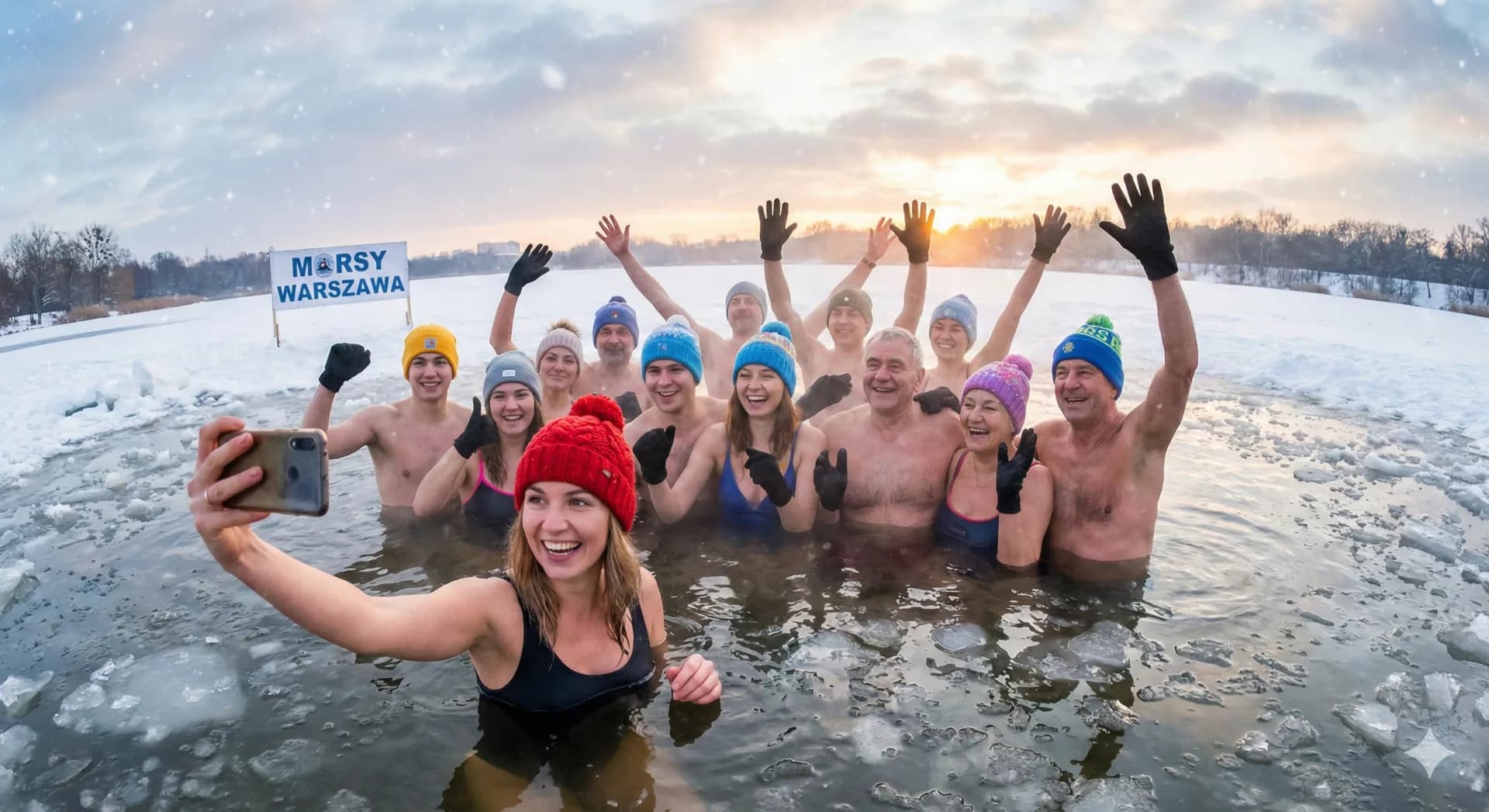
If you have walked past a lake, river, or the Baltic Sea in Poland between November and March, you have likely seen something confusing. It’s freezing cold, perhaps snowing, and yet there is a group of people stripping down to their swimwear, wearing nothing but hats and gloves, laughing as they march into the icy water.
Don't worry - they haven't lost their minds. They are "Morsy" (Walruses), and joining them might just be the best way to survive - and actually enjoy - your first Polish winter.
What is 'Morsowanie'?
Morsowanie (Winter Swimming) is a massive trend in Poland. It isn't just an extreme sport for adrenaline junkies; it is a beloved national pastime for people of all ages, from teenagers to grandmothers.
For a migrant building a life here, the winter can be tough. The days are short, the sun is rare, and the temperature drops. The Polish solution?09*Don't hide from the cold - embrace it.**
Why on Earth would you do this?
Aside from the bragging rights of sending a photo to your family back home, there are genuine quality-of-life benefits:
-
The "Endorphin Kick": The shock of cold water triggers a massive release of endorphins (happiness hormones). You will leave the water feeling euphoric and full of energy. It is a fantastic weapon against SAD (Seasonal Affective Disorder).
-
Immunity Boost: This is what Poles call hartowanie (tempering/hardening). Regular exposure to cold improves circulation and strengthens the immune system.
-
Social Integration: This is the most important part. Morsowanie is rarely done alone. It is a social ritual. People gather, warm up together, swim, and often drink hot tea or share a meal afterwards. It is one of the most open, non-judgmental communities you will find. You don't need to speak perfect Polish to shiver with a stranger - it’s an instant bond!
How to Start: A Beginner’s Guide
You cannot just jump into a frozen lake. You need to do it safely. Here is your starter pack:
The Gear:
-
Swimwear: Obviously.
-
A Beanie (Czapka): Mandatory. You lose a lot of heat through your head.
-
Gloves: Keep your hands dry and warm; once they get numb, dressing afterwards is difficult!
-
Neoprene Shoes: Very important. The ground is freezing, and you don't want to cut your feet on ice or rocks.
-
A Mat/Towel: To stand on while changing.
The Process:
-
The Warm-up (Rozgrzewka): Never enter the water cold. You must run, do jumping jacks, or squat on the beach for 10–15 minutes until you feel hot, but not sweating.
-
The Entry: Walk in confidently but calmly. Do not wet your hands or head. Keep them in the air.
-
The Dip: Immerse yourself up to your chest/neck. Focus on your breathing. It will be a shock, but try to calm your breath.
-
The Duration: For your first time? 30 to 60 seconds is enough. Listen to your body.
-
The Aftermath: Get out, dry off quickly, dress in warm, loose layers immediately, and drink hot tea.
Where to find your "Stado" (Herd)
Almost every city in Poland with a body of water has a club. They usually meet on weekends around 10:00 or 11:00 AM.
-
In Warsaw: Check out the groups at Jeziorko Czerniakowskie.
-
In Kraków: Head to Zakrzówek or Bagry.
-
In Gdańsk/Sopot: You have the beautiful Baltic Sea (which is actually warmer than most lakes in winter!). Look for crowds near the Sopot Pier.
-
In Wrocław: Look for groups at Morskie Oko.
Useful Resources & Links
Use these links to find a group near you or learn more about the safety protocols.
-
Find a Group on Facebook: This is how 99% of these events are organized.
-
Search query: "Morsy [Name of your city]" (e.g., Morsy Warszawa, Morsy Kraków).
-
Tip: Join the group and post in English: "Hi, I'm new here and want to try. Can I join you this Sunday?" You will likely get a very warm welcome.
-
-
Interactive Map of Bathing Spots:
- Google Maps Search for 'Plaża' (Beach) – Look for beaches near you; if there is water, there are likely Walruses on Sunday mornings.
-
Safety Video (English Subtitles):
- Search YouTube for "Wim Hof Method for Beginners" – While Polish morsowanie is its own tradition, the breathing techniques from Wim Hof are very similar and helpful for beginners to understand how to handle the cold shock.
Final Thought: Building a quality life in a new country is about new experiences. It might seem scary, but stepping into that icy water is a powerful metaphor for adaptation: it’s a shock at first, but once you breathe through it, you feel stronger than ever!
Useful words and phrases
| Polish Word | Pronunciation (Approx.) | Meaning |
|---|---|---|
| Mors | Mors | A Walrus (A male winter swimmer). |
| Foczka | Fotch-ka | A Seal (A female winter swimmer – an affectionate term). |
| Morsowanie | Mor-so-vah-nie | The activity of winter swimming. |
| Rozgrzewka | Roz-ghev-ka | Warm-up. (You will hear this shouted before everyone runs in!). |
| Hartowanie | Har-to-vah-nie | Hardening/Tempering. Building immunity through cold. |
| Przerębel | Pshe-rem-bel | An ice hole. (A hole cut in the ice when the lake is frozen over). |
| Zimno? | Zheem-no? | Cold? (The most common question you will be asked). |
-
"Czy można dołączyć?" (Chy mozh-na do-lon-chitch?)
- Meaning: "Can I join?"
-
"To mój pierwszy raz." (To moy pyer-vshy raz.)
- Meaning: "This is my first time." (People will immediately look after you and give you advice).
-
"Ile stopni ma woda?" (Ee-le stop-nee ma vo-da?)
- Meaning: "What is the water temperature?"
-
"Jak długo siedzicie?" (Yak dwoo-go she-jee-che?)
- Meaning: "How long are you staying in?"
-
"Jest super!" (Yest soo-per!)
- Meaning: "It’s great!" (A good answer when someone asks how you feel).
Further reading

25 Jun 2026

18 Jun 2026