
Yanosik and Poland's Secret Driving Rules
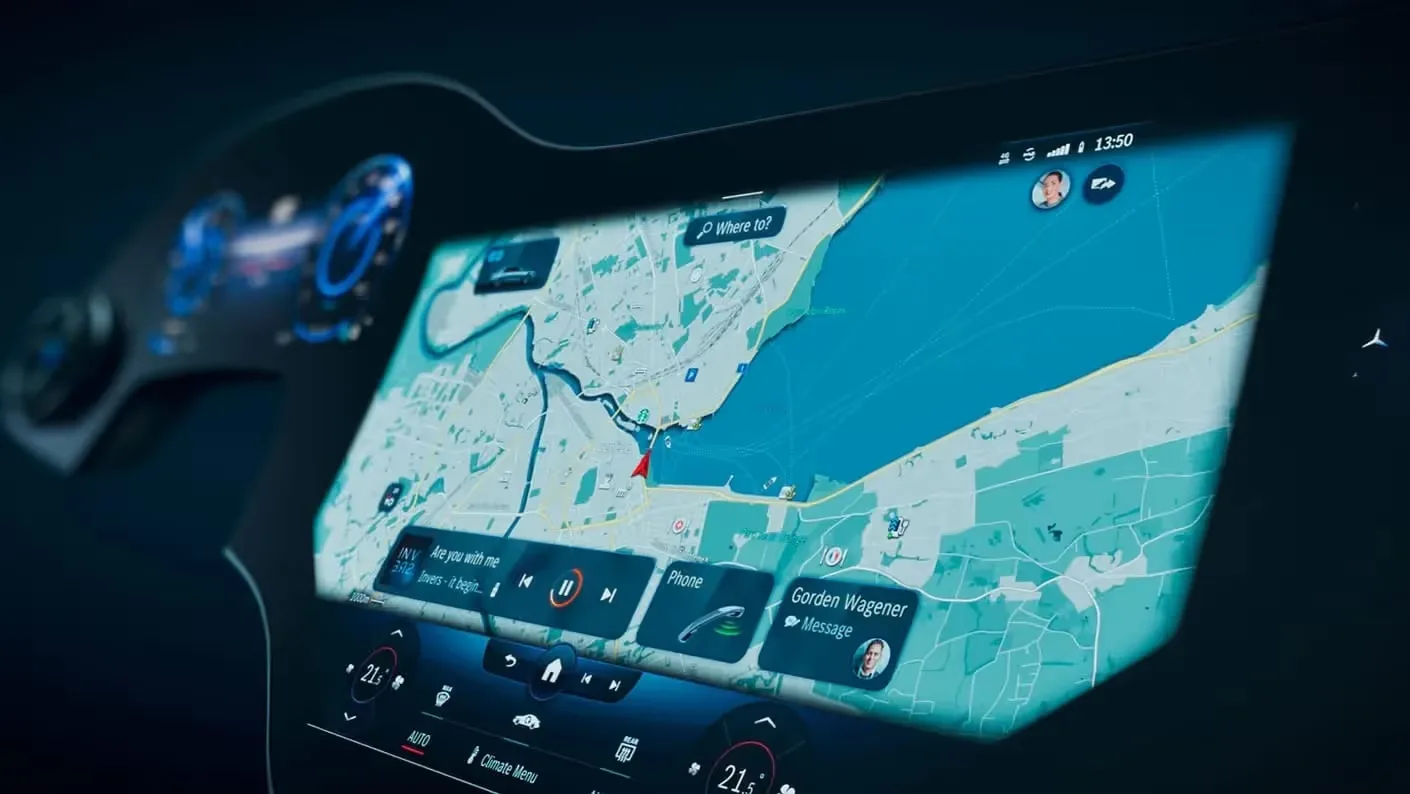
The Asphalt Brotherhood: Yanosik and Poland's Secret Driving Rules
If you have driven in Poland for more than a few days, you have probably noticed a bizarre phenomenon. The speed limits fluctuate constantly, dropping from 90 km/h to 50 km/h and back up again within a few kilometers. Hidden speed cameras and unmarked police cars seem to be everywhere. Yet, local drivers never seem to get caught, smoothly slowing down exactly where they need to and speeding back up moments later.
Their secret is not just good luck, and they are definitely not using Google Maps. They are running an app called Yanosik.
Mastering driving in Poland requires understanding two things: the digital ecosystem of community reporting, and the highly specific, often confusing local traffic laws that trap foreigners on a daily basis. Here is your guide to surviving the Polish asphalt.
The Digital Co-Pilot: What Yanosik Actually Is
While Google Maps is great for finding a restaurant, Polish drivers consider it a secondary tool. The primary navigation app running in the background of almost every Polish car is Yanosik.
It is essentially a massive, community-driven radar and police scanner. It operates on an unspoken social contract: millions of drivers constantly report hazards, speed cameras (fotoradary), and most importantly, unmarked police cars (nieoznakowane radiowozy) to each other in real-time.
When you drive with Yanosik, a voice will suddenly warn you: "Unmarked police car in 1000 meters." You slow down, look at the black BMW passing you, and hit "Confirm" on your screen to keep the warning active for the drivers behind you. By participating in this digital brotherhood, you avoid racking up thousands of złoty in speeding tickets (mandaty).
The Ultimate Trap: Sectional Speed Checks (OPP)
The most feared traffic enforcement tool in Poland is the Odcinkowy Pomiar Prędkości (OPP), or sectional average speed check.
Unlike a normal speed camera that measures your speed at a single point, an OPP system uses cameras to scan your license plate at the start and end of a specific road segment (which can be several kilometers long). It then calculates your exact average speed over that distance. If your average is even slightly over the limit, a fine automatically arrives in the mail.
The Yanosik Hack: When you enter an OPP zone, Yanosik completely changes its interface. It tracks your exact average speed since you passed the first camera, showing you a color-coded dial. If you accidentally sped up to pass a truck, the app tells you exactly how much you need to slow down for the rest of the zone to bring your average back under the legal limit before you hit the exit camera.
The Sacred Green Arrow (Zielona Strzałka)
If there is one specific traffic law that consistently ruins a foreigner's day, it is the conditional green turn arrow.
At many intersections, you will see a small, illuminated green arrow pointing right, attached next to a red light. In many countries, this means "yield to traffic and go." In Poland, it is legally equivalent to a STOP sign.
You must bring your car to a complete, absolute halt (your wheels must stop spinning) in front of the intersection. You look for pedestrians, look for cross traffic, and only then can you proceed. If a police officer or a camera catches you rolling through a green arrow without stopping - even at 5 km/h on an empty road - you will be hit with a fine of 100 PLN and 6 penalty points.
Unwritten Road Etiquette
Beyond the app and the laws, Polish drivers communicate using a strict visual language.
-
The "Zip Merge" (Jazda na suwak): This is not just a polite suggestion; it is a mandatory traffic law in Poland. When a lane ends, drivers in the continuing lane must let exactly one car from the ending lane merge in front of them - like the teeth of a zipper. If you try to block someone from merging, you are breaking the law.
-
The Hazard Light Thank You: If you let a Polish driver merge in front of you, or if you slow down to let them out of a tight parking spot, they will flash their hazard lights (światła awaryjne) for one or two seconds. This is the universal Polish sign for "Thank you."
-
The High-Beam Warning: If an oncoming car flashes its high beams at you on a country road, check your speed immediately. They are signaling that there is a speed trap or a police patrol waiting for you just around the bend. (Occasionally, it just means you forgot to turn on your headlights, which are mandatory 24/7 in Poland).
Expat Driving Cheat Sheet
| Polish Term | Pronunciation | What It Actually Means |
|---|---|---|
| Mandat | MAHN-daht | A traffic ticket or fine. |
| Fotoradar | foh-toh-RAH-dar | A stationary speed camera. |
| Nieoznakowany | nyeh-oz-nah-koh-VAH-nih | Unmarked (referring to a stealth police car). |
| Odcinkowy pomiar | od-cheen-KOH-vih POH-myar | Sectional average speed check zone. |
| Zielona strzałka | zyeh-LOH-nah STSHAW-kah | The green conditional arrow (Remember: you MUST stop!). |
| Jazda na suwak | YAZ-dah nah SOO-vahk | The zip merge (alternating merge when a lane ends). |
Essential Resources & Portals
-
Yanosik App - The absolute necessity for driving in Poland. Download it, set it to English, and run it in the background on every single road trip.
-
CANARD (canard.gitd.gov.pl) - The official government portal that manages the national network of speed cameras and OPP zones. You can check the map to see exactly where the stationary traps are located.
-
e-TOLL - The official state system for paying tolls on national highways. (Note: Many private highways like the A2 to Poznań or A4 to Kraków use their own apps like Autopay, which can also be integrated directly into Yanosik).
Further reading

2 Sept 2026

25 Aug 2026