
Legal Wild Camping: Poland's Zanocuj w Lesie Program
Legal Wild Camping: Poland's Zanocuj w Lesie Program
In most European countries, walking into a random forest with a sleeping bag and setting up a tent will result in a swift encounter with local authorities and a heavy fine. Wild camping is heavily restricted or outright banned across much of the continent. Poland, however, has taken the opposite approach.
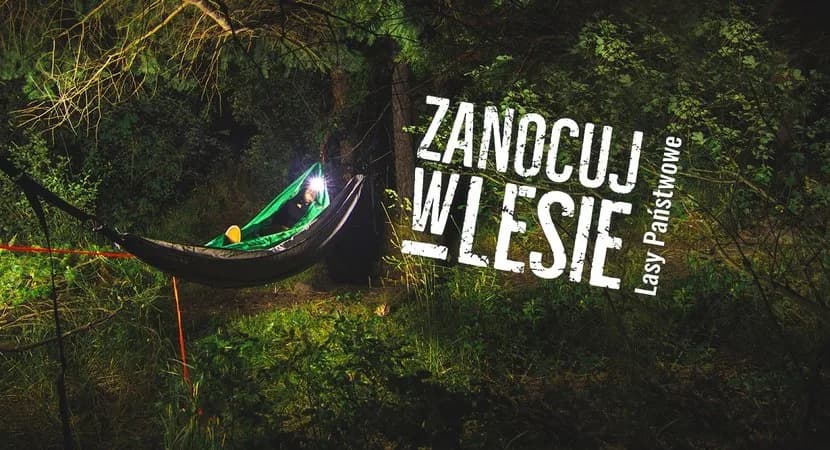
Through an official program called Zanocuj w Lesie (Spend the Night in the Forest), the Polish State Forests (Lasy Państwowe) have permanently designated over 600,000 hectares of wild land where anyone can legally pitch a hammock, string up a tarp, and sleep completely off the grid for free.
This is not about established campsites with showers and electricity. This is true, unsupported bushcraft and wild camping. Here is exactly how the system works, how to navigate the official maps, and the rules you must follow to sleep in the woods responsibly.
The 2-Night, 9-Person Rule
The beauty of the Zanocuj w Lesie program is its lack of bureaucracy, provided you stay within certain limits.
If your group consists of nine people or fewer, and you plan to stay in one designated forest zone for no more than two consecutive nights, you do not need to notify anyone, fill out any forms, or pay any fees. You simply pack your gear, walk into the designated zone, and set up camp.
If you plan to stay longer than two nights, or if you have a group of ten or more people, you are legally required to send an email to the local forestry inspectorate (Nadleśnictwo) at least two working days in advance to get approval.
Finding the Zones: Mastering the mBDL App
You cannot simply walk into any patch of trees in Poland and go to sleep. You must be inside one of the officially designated Zanocuj w Lesie zones. To find them, you need to use the digital infrastructure built by the State Forests.
You will need to download the official mBDL (Mobilny Bank Danych o Lasach) app on your phone, or use the desktop web version before your trip. The app is a highly detailed, professional forestry map.
To find the camping zones in the app:
- Open the main map menu.
- Go to "Mapy BDL" (BDL Maps).
- Select "Mapa zagospodarowania turystycznego" (Tourist infrastructure map).
- Make sure the layer for "Obszary Zanocuj w lesie" is turned on.
The map will then highlight massive tracts of forest in a specific color (usually orange or pink boundaries). As long as you set up your camp inside those borders, you are operating entirely within the law.
Leave No Trace and the Fire Ban
The program relies entirely on the "Leave No Trace" philosophy. You are a guest in a fragile ecosystem, and the rules are strictly enforced by forest rangers (Straż Leśna).
- Shelter: You can sleep on the ground, in a hammock, or under a tarp. You can use a standard tent, but you are strictly forbidden from altering the forest floor to pitch it. You cannot dig trenches, clear heavy brush, or drive large stakes that damage plant life.
- No Open Fires: This is the most critical rule. You cannot build a campfire anywhere in the forest unless you are at a specifically marked, permanent fire pit built by the forestry service.
- Cooking: Recently, the State Forests permitted the use of small, portable gas stoves for cooking inside the designated zones. However, this is suspended during periods of high fire danger (zagrożenie pożarowe). You must check the fire danger level for your specific region on the state forestry website before you ignite a stove.
- Trash: There are no trash cans in the wild. Every single piece of packaging you bring into the forest must leave in your backpack.
Reading the Forest: Hazards and Hunting
Even within a designated wild camping zone, certain areas can become temporarily restricted for safety reasons. You must pay attention to the physical warning signs posted on trees or wooden barriers along the forest paths.
- Zrywka / Ścinka Drzew (Tree Felling): If you see yellow warning signs indicating timber harvesting or tree felling, you must turn around immediately. These are highly dangerous active industrial zones, and entering them is both illegal and life-threatening.
- Polowanie (Hunting): Polish forests are actively managed by hunting associations (Koła Łowieckie). From autumn through winter, there are organized group hunts (polowania zbiorowe). The dates and locations of these hunts are registered with the local municipality (Gmina). While forest paths will be marked with warning signs during an active hunt, it is your responsibility to check the local municipality's website to ensure you aren't pitching a hammock in the middle of a scheduled hunting drive.
Forestry Terminology
| Polish Term | Pronunciation | What It Means |
|---|---|---|
| Zanocuj w lesie | zah-NOH-tsooy v LEH-syeh | "Spend the night in the forest" (The official program name). |
| Nadleśnictwo | nahd-lesh-NEETS-tvoh | The local forestry inspectorate / district office. |
| Straż Leśna | STRAHZH LESH-nah | The Forest Guard / Rangers (They can and will issue fines for breaking rules). |
| Ścinka drzew | SHCHEEN-kah DZHEV | Tree felling / Logging area (Do not enter). |
| Zakaz wstępu | ZAH-kahz VSTEM-poo | Entry forbidden. |
| Zagrożenie pożarowe | zah-groh-ZHEH-nyeh poh-zhah-ROH-veh | Fire danger level (Check this before using a gas stove). |
Essential Resources
-
mBDL App (Mobilny Bank Danych o Lasach): Available on iOS and Android. Download it and download the offline map data for your chosen region before you lose cell service in the woods.
-
Lasy Państwowe Official Site: The central hub for all rules, updates on the program, and daily fire hazard maps.
Further reading

2 Sept 2026
25 Aug 2026